
Introduction
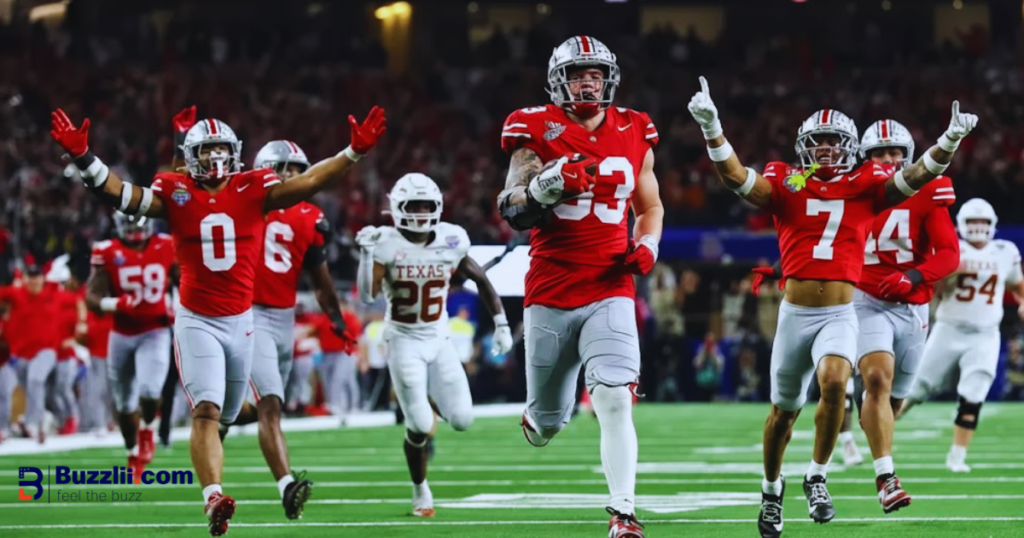
Another reminder of why postseason football still attracts interest from around the world was provided by the College Football Playoff. The Miami Hurricanes shocked the Ohio State Buckeyes in a fiercely contested Cotton Bowl Classic, earning a hard-earned victory and moving on to the CFP semifinal.
The significance of the game extended far beyond the outcome. Miami arrived with confidence and momentum following a successful late-season run, while Ohio State was one of the tournament favorites going into the quarterfinal. The game that ensued was characterized by discipline, effective defense, and timely plays at key junctures.
This article explains how Miami pulled off the upset, what went wrong for Ohio State football, and why the outcome matters in the context of the College Football Playoffs as a whole.
Cotton Bowl Quarterfinal Overview
4️⃣ got us 6. pic.twitter.com/I7qicdpqDW
— Ohio State Football (@OhioStateFB) January 1, 2026
A High-Stakes Playoff Setting
One of the most well-known postseason venues in sports, the Cotton Bowl Classic, featured the game at AT&T Stadium in Arlington, Texas. The stakes were obvious because it was a CFP quarterfinal. If you win, you progress; if you lose, the season is over.
Ohio State came with a roster designed for long postseason campaigns and playoff experience. Miami, on the other hand, came in as a lower seed but was confident due to its previous results and defense, which had quietly emerged as one of the field’s most reliable units.
How Miami Controlled the Game
Early Momentum Set the Tone
Fourth and Smith.
— Ohio State Football (@OhioStateFB) January 1, 2026
📺 ESPN pic.twitter.com/Dg0P37kehr
Miami’s strategy was clear from the first series. The Hurricanes prioritized ball control, field position, and minimizing errors over playing conservatively. Miami gained a lead in the first half and made Ohio State play from behind, demonstrating the early success of that tactic.
The Hurricanes maximized their scoring opportunities and took advantage of long drives. The offense regularly moved the chains and avoided turnovers, which are crucial in postseason games, even though it did not rely on big plays.
Defensive Execution Made the Difference
Miami’s defense turned out to be the game’s key component. The Hurricanes continuously put pressure on the quarterback without compromising coverage discipline, which hindered Ohio State’s ability to produce a steady offensive rhythm.
This meant fewer opportunities for huge plays and fewer clear looks downfield for Ohio State football. While the secondary stopped the explosive gains that have frequently characterized Buckeye victories in high-profile games, Miami’s defensive front won crucial matchups.
Ohio State’s Missed Opportunities
Struggles to Regain Momentum
In the second half, Ohio State made an effort to close the margin and maintain the game’s viability. Nevertheless, Miami stopped every possible change in momentum, whether it was through a missed scoring opportunity, a forced punt, or a stalled red-zone drive.
Ohio State never completely established control at the line of scrimmage, despite moments of offensive efficiency. As the game went on, the failure to consistently convert third downs became costly.
Execution Under Pressure
Small mistakes are exacerbated in playoff scenarios. Ohio State football struggled to complete drives and remain composed under pressure. Miami’s disciplined approach and missed opportunities helped the Hurricanes gradually win the game.
A Turning Point for the Hurricanes Program
From Contender to Semifinalist
With the victory, Miami reached a significant milestone for the program and went to the College Football Playoff semifinal. The Hurricanes’ season-long focus on defensive organization, situational awareness, and controlled offensive execution was justified by the win.
The outcome meant more to Miami fans than just an upset. It demonstrated the program’s ability to compete on the largest stages of the sport against well-established national powers.
What the Result Means for Ohio State Football
A Season That Fell Short of Expectations
Ohio State football had hopes of winning a championship going into the postseason. These objectives came to an abrupt halt with the quarterfinal defeat, which spurred quick consideration of areas that required improvement.
The Cotton Bowl result demonstrated the narrow margins that separate advancement from elimination in the postseason era, even if the Buckeyes are still among the most reliable programs in college football.
Looking Ahead
Ohio State’s foundation is still solid in spite of the setback. The Buckeyes will continue to be competitive thanks to recruiting pipelines, coaching stability, and program infrastructure. Converting regular-season success into postseason consistency will be the next task.
Key Insights and Takeaways
- The most effective team on the field was Miami’s disciplined defense.
- The Hurricanes were able to control the game’s tempo early on.
- Despite late pressure, Ohio State football was unable to seize crucial opportunities.
- The outcome demonstrates that in the CFP, planning and execution are more important than seeding.
- As the semifinals approach, Miami’s progress changes the story.
Conclusion
In My Views, Miami’s Cotton Bowl triumph over Ohio State was a potent illustration of how discipline and performance can change postseason expectations in college football. The Hurricanes earned their spot in the College Football Playoff semifinal by managing the game’s tempo and playing solid defense.
In addition to signaling the end of a promising season for Ohio State football, the defeat served as further evidence of the slim margins that characterize postseason success. Miami advances confidently as the CFP goes on, but Ohio State shifts its attention to introspection and rejuvenation.
Frequently Asked Questions
Also Read : Tatiana Schlossberg, JFK’s Granddaughter and Environmental Journalist, Dies at 35